

What Makes RDGYB-JD1000 Different From Other Frequency Domain Dielectric Response Analyzers?
Discover what makes RDGYB-JD1000 different from other frequency domain dielectric response analyzers. Learn about FDS, PDC, moisture diagnosis, accuracy, and field testing advantages.
Why Do Utilities Need Advanced Dielectric Response Analyzers?
Power transformers are critical assets in electrical networks. Their insulation condition directly affects:
- Equipment reliability
- Power system stability
- Maintenance costs
- Service life
As transformer technology develops, traditional insulation tests may not provide enough information for modern asset management.
Utilities now require diagnostic equipment that can answer deeper questions:
- Is the transformer insulation aging?
- How much moisture exists inside cellulose insulation?
- Is insulation deterioration developing?
- Can the transformer continue operating safely?
A professional Frequency Domain Dielectric Response (FDS) analyzer provides more detailed information by analyzing insulation behavior across multiple frequencies.
However, not all dielectric response analyzers provide the same performance.
The RDGYB-JD1000 Frequency Domain Dielectric Response Insulation Diagnostic Analyzer combines advanced measurement technology, insulation modeling, and field application capability to provide comprehensive transformer condition assessment.
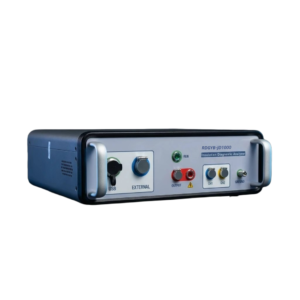
Click the image to know more about Wrindu Frequency Domain Dielectric Response Insulation Diagnostic Analyzer.
What Is a Frequency Domain Dielectric Response Analyzer?
How Does a Dielectric Response Analyzer Evaluate Transformer Insulation?
A Frequency Domain Dielectric Response Analyzer measures how insulation responds to AC signals at different frequencies.
The analyzer applies voltage and measures the resulting current response.
Based on this data, it calculates:
- Capacitance
- Dielectric loss
- Polarization characteristics
- Frequency response curves
The results help engineers evaluate insulation conditions such as:
- Moisture content
- Aging level
- Oil conductivity
- Insulation deterioration
Compared with traditional insulation tests, dielectric response analysis provides a more complete view of insulation behavior.
Why Is RDGYB-JD1000 More Than a Traditional Tan Delta Tester?
Can a Conventional Tan Delta Tester Provide Complete Insulation Diagnosis?
Traditional tan delta testing is useful for detecting insulation problems.
However, it mainly provides information at specific frequencies.
This means it may not fully reveal:
- Moisture distribution
- Polarization behavior
- Aging mechanisms
- Internal insulation changes
The RDGYB-JD1000 uses Frequency Domain Spectroscopy technology to analyze insulation characteristics over a wide frequency range.
Instead of measuring only one point, it creates a complete dielectric response profile.
This provides engineers with more information for condition assessment.
What Technologies Are Integrated Inside RDGYB-JD1000?
Why Does Combining FDS and PDC Improve Diagnostic Accuracy?
One major advantage of RDGYB-JD1000 is the integration of:
- Frequency Domain Spectroscopy (FDS)
- Polarization Depolarization Current (PDC)
These two technologies analyze insulation from different perspectives.
FDS Analysis
Provides:
- Frequency response curves
- Dielectric loss characteristics
- Moisture-related information
PDC Analysis
Provides:
- Polarization behavior
- Depolarization characteristics
- Time-domain response
By combining both methods, engineers obtain a more complete understanding of transformer insulation.
How Does RDGYB-JD1000 Improve Transformer Moisture Diagnosis?
Why Is Accurate Moisture Assessment Important for Transformers?
Moisture is one of the most dangerous factors affecting oil-paper insulation.
It can cause:
- Faster cellulose aging
- Lower insulation strength
- Higher dielectric loss
- Increased failure risk
A major challenge is that most moisture exists inside solid insulation materials.
Simple oil sampling cannot always show the complete condition.
The RDGYB-JD1000 analyzes dielectric response characteristics to evaluate:
- Cellulose moisture content
- Insulation liquid conductivity
- Uneven moisture distribution
This helps maintenance teams understand the real insulation condition.
What Measurement Range Does RDGYB-JD1000 Provide?
Why Does a Wide Frequency Range Matter in Dielectric Testing?
Different insulation problems appear in different frequency areas.
A wider measurement range provides more diagnostic information.
The RDGYB-JD1000 supports:
- Frequency range: 0.1 mHz–10 kHz
- Optional output voltage up to 10 kV
The wide frequency range helps analyze:
Low Frequency Response
Useful for:
- Moisture evaluation
- Polarization effects
- Conductive losses
High Frequency Response
Useful for:
- Insulation structure analysis
- Capacitance characteristics
How Does RDGYB-JD1000 Handle High-Interference Substation Environments?
Can Dielectric Response Testing Work in Strong Electromagnetic Fields?
Field testing conditions are often challenging.
Substations contain:
- High-voltage equipment
- Large transformers
- Switching devices
- Strong electromagnetic fields
These conditions can affect measurement accuracy.
The RDGYB-JD1000 is designed with:
- Strong anti-interference capability
- Stable signal measurement
- Advanced filtering technology
This improves measurement reliability during on-site testing.
Why Is Measurement Accuracy Important for Insulation Diagnosis?
How Can Accuracy Affect Transformer Condition Assessment?
Dielectric response analysis depends on accurate measurement data.
Small errors may affect:
- Curve analysis
- Moisture calculation
- Insulation evaluation
The RDGYB-JD1000 provides high-precision measurement performance, with accuracy specifications designed for professional transformer diagnosis.
High accuracy helps engineers make more reliable maintenance decisions.
How Does RDGYB-JD1000 Simplify Field Testing?
What Features Make the Analyzer Easy to Use in Substations?
Field engineers often work under difficult conditions.
Testing equipment needs to be:
- Portable
- Reliable
- Easy to operate
- Fast to deploy
The RDGYB-JD1000 provides:
Portable Design
Suitable for transportation between substations.
Automatic Testing Process
Reduces operation complexity.
Real-Time Data Display
Allows engineers to monitor test progress.
Automatic Report Generation
Improves maintenance documentation.
How Does the Software Improve Diagnostic Efficiency?
Why Is Analysis Software Important for FDS Testing?
Collecting measurement data is only the first step.
The real value comes from accurate interpretation.
The RDGYB-JD1000 software provides:
- Test project management
- Connection diagrams
- Real-time curves
- Automatic analysis
- Report generation
The system can evaluate:
- Insulation system geometry
- Cellulose moisture content
- Insulation liquid conductivity
- Dielectric loss
- Moisture distribution
What Makes RDGYB-JD1000 Suitable for Different High-Voltage Equipment?
Can One Analyzer Test More Than Power Transformers?
Yes.
The RDGYB-JD1000 can be applied to various oil-paper insulated equipment, including:
- Power transformers
- Transformer bushings
- Inductors
- Instrument transformers
- Rotating machines
- Cables
This makes the analyzer valuable for utilities managing different types of electrical assets.
What Did Field Comparison Testing Demonstrate?
How Does RDGYB-JD1000 Perform in Practical Applications?
A field comparison test was performed on a 220kV transformer bushing.
The evaluation included:
- Capacitance measurement
- Dielectric loss testing
- Cellulose moisture assessment
- Oil conductivity analysis
The test demonstrated that frequency domain dielectric response technology can provide effective insulation condition evaluation in real high-voltage equipment applications.
Why Should Utilities Choose RDGYB-JD1000 Instead of Basic Insulation Testers?
What Are the Main Advantages of RDGYB-JD1000?
Compared with basic insulation testing equipment, RDGYB-JD1000 provides:
1. More Complete Insulation Information
Analyzes insulation behavior across multiple frequencies.
2. Moisture Diagnosis Capability
Evaluates cellulose moisture conditions.
3. Combined FDS and PDC Technology
Provides both frequency-domain and time-domain analysis.
4. Better Field Adaptability
Designed for high-voltage substation environments.
5. Advanced Data Analysis
Provides professional diagnostic reports.
What Should Engineers Consider Before Buying a Dielectric Response Analyzer?
How Can Utilities Select the Right FDS Testing Equipment?
Before purchasing equipment, engineers should evaluate:
Frequency Range
A wider range provides more diagnostic information.
Voltage Capability
Higher voltage capability supports different applications.
Accuracy
Important for reliable condition assessment.
Software Functions
Good analysis software improves testing efficiency.
Field Performance
Noise resistance and portability are important for real applications.
The RDGYB-JD1000 is designed to meet these requirements for professional transformer diagnosis.
FAQs
What is RDGYB-JD1000 used for?
RDGYB-JD1000 is used for transformer insulation diagnosis, moisture assessment, dielectric response analysis, and condition evaluation of high-voltage equipment.
What technologies does RDGYB-JD1000 use?
It combines:
- Frequency Domain Spectroscopy (FDS)
- Polarization Depolarization Current (PDC)
for comprehensive insulation analysis.
What frequency range does RDGYB-JD1000 support?
The analyzer supports a frequency range from 0.1 mHz to 10 kHz.
Can RDGYB-JD1000 detect transformer moisture?
Yes. It can evaluate cellulose moisture content and moisture distribution characteristics.
Is RDGYB-JD1000 suitable for field testing?
Yes. It is designed for substation applications with portable structure and strong anti-interference capability.
What equipment can be tested with RDGYB-JD1000?
Applications include:
- Transformers
- Bushings
- Inductors
- Instrument transformers
- Cables
How is RDGYB-JD1000 different from a traditional tan delta tester?
A tan delta tester mainly provides dielectric loss measurement, while RDGYB-JD1000 provides multi-frequency dielectric response analysis and moisture diagnosis.
Why is FDS important for transformer maintenance?
FDS provides deeper insulation information, helping utilities detect problems earlier and improve maintenance decisions.
Conclusion
Modern transformer maintenance requires more than simple pass-or-fail testing.
Utilities need diagnostic equipment that can:
- Detect hidden insulation problems
- Evaluate moisture conditions
- Monitor aging trends
- Support condition-based maintenance
The RDGYB-JD1000 Frequency Domain Dielectric Response Insulation Diagnostic Analyzer combines advanced FDS and PDC technologies, wide frequency measurement capability, strong field performance, and intelligent analysis software.
It provides engineers with a reliable solution for improving transformer reliability, reducing maintenance risks, and extending equipment service life.
