

How Does Frequency Domain Dielectric Response Testing Detect Transformer Moisture and Aging Problems?
Learn how Frequency Domain Dielectric Response (FDS) testing detects transformer moisture, insulation aging, and dielectric changes. Explore Wrindu RDGYB-JD1000 for advanced transformer insulation diagnosis.
Transformer insulation degradation is one of the main causes of power equipment failure.
During long-term operation, transformer insulation systems are affected by:
- Thermal aging
- Moisture contamination
- Oil deterioration
- Electrical stress
These problems gradually reduce insulation strength and increase failure risk.
Traditional insulation tests such as insulation resistance measurement can identify general insulation conditions, but they may not provide enough information about moisture distribution and aging processes.
Frequency Domain Dielectric Response (FDS) testing provides a more detailed method by analyzing insulation behavior across different frequencies.
The Wrindu RDGYB-JD1000 Frequency Domain Dielectric Response Insulation Diagnostic Analyzer uses advanced dielectric response technology to help engineers evaluate transformer insulation condition more accurately.
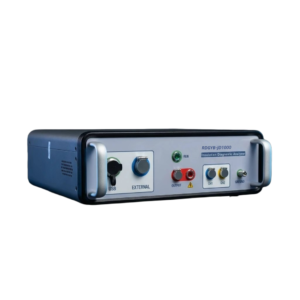
Click the image to know more about Wrindu Frequency Domain Dielectric Response Insulation Diagnostic Analyzer.
Why Is Moisture a Serious Problem in Transformer Insulation?
Transformer insulation usually consists of:
- Cellulose paper
- Pressboard
- Insulating oil
Among these materials, cellulose insulation is highly sensitive to moisture.
When moisture content increases, it can cause:
- Reduced insulation strength
- Faster cellulose aging
- Increased dielectric losses
- Higher risk of insulation breakdown
Even a small increase in moisture can significantly affect transformer life expectancy.
The challenge is that moisture is often hidden inside solid insulation materials and cannot be easily detected through simple visual inspection.
How Does FDS Testing Identify Transformer Moisture Problems?
What Information Does FDS Measure?
Frequency Domain Dielectric Response testing applies AC signals at different frequencies and measures insulation responses.
The test evaluates:
- Dielectric loss factor
- Capacitance changes
- Frequency response characteristics
The resulting curve provides information about insulation behavior.
Different frequency ranges represent different physical processes inside the insulation system.
Why Can Low Frequency Data Reveal Moisture Information?
Moisture mainly affects slow polarization processes inside cellulose insulation.
At lower frequencies:
- Polarization effects become stronger
- Moisture influence becomes more visible
- Insulation condition differences become easier to identify
Therefore, low-frequency dielectric response analysis is widely used for transformer moisture diagnosis.
How Does FDS Evaluate Transformer Aging?
Transformer aging mainly affects cellulose insulation.
During aging:
- Cellulose chains break down
- Insulation structure changes
- Dielectric properties are modified
FDS can detect these changes by analyzing variations in dielectric response curves.
Engineers can compare:
- New transformer baseline data
- Historical test results
- Similar transformer measurements
to evaluate aging trends.
What Are the Advantages of FDS Compared with Traditional Insulation Tests?
Traditional tests usually provide limited information.
For example:
| Test Method | Main Information |
|---|---|
| Insulation Resistance Test | Overall insulation resistance |
| Power Factor Test | Dielectric loss at fixed frequency |
| FDS Test | Dielectric behavior over wide frequency range |
FDS provides more detailed insulation characteristics because it evaluates the complete frequency response.
How Does RDGYB-JD1000 Improve Transformer Insulation Diagnosis?
The Wrindu RDGYB-JD1000 is designed for advanced transformer insulation evaluation.
Key capabilities include:
- Wide frequency measurement range
- Accurate dielectric response analysis
- Moisture condition evaluation
- Aging trend analysis
The analyzer helps engineers make better maintenance decisions without unnecessary transformer disassembly.
When Should Utilities Perform FDS Testing?
FDS testing is recommended for:
Aging Transformers
When transformers have operated for many years, FDS can help identify insulation deterioration.
High-Importance Transformers
For transformers in substations and power plants, early diagnosis reduces unexpected outages.
Transformers After Overload Events
Thermal stress may accelerate insulation aging. FDS can help evaluate possible damage.
FAQs
Q1: How does frequency domain dielectric response detect transformer moisture?
A: FDS detects transformer moisture by measuring insulation response at different frequencies. Moisture changes dielectric loss and polarization behavior, especially at low frequencies, allowing engineers to estimate moisture conditions.
Q2: Can FDS testing evaluate transformer insulation aging?
A: Yes. FDS can identify aging-related changes by analyzing dielectric loss, frequency response, and polarization characteristics of transformer insulation.
Q3: What is the relationship between FDS and transformer moisture content?
A: Higher moisture content usually causes higher dielectric losses and changes in frequency response curves. FDS analysis helps evaluate moisture influence inside cellulose insulation.
Q4: Why use dielectric response testing for power transformer diagnosis?
A: Dielectric response testing provides deeper insulation information, including moisture condition, aging trends, and dielectric changes, helping improve transformer maintenance decisions.
Q5: Which transformer problems can FDS testing identify?
A: FDS testing can help identify insulation moisture, aging deterioration, abnormal dielectric loss, and other insulation condition changes in power transformers.
Conclusion
Frequency Domain Dielectric Response testing provides deeper insight into transformer insulation condition compared with traditional insulation tests.
By analyzing dielectric behavior across different frequencies, engineers can identify moisture influence, aging development, and insulation deterioration trends.
The Wrindu RDGYB-JD1000 Frequency Domain Dielectric Response Insulation Diagnostic Analyzer provides an effective solution for predictive transformer maintenance and insulation condition assessment.
