

How Do You Choose a Primary Current Injection Tester for Electrical Testing?
Compare current ratings, output voltage, circuit impedance, duty cycle, and input power to select a primary current injection tester for your application.
A primary current injection tester should be selected according to the required test current, circuit impedance, test duration, and measurement objectives. Its maximum current rating is only one part of the selection process.
Engineers must also confirm the available output voltage, input power requirements, duty cycle, cable capacity, and compatibility with the equipment under test. These factors determine whether the tester can deliver the required current under actual operating conditions.
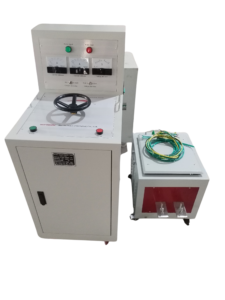
Click the image to know more about 6000A Primary Current Injection Tester.
What Output Current Do You Need From a Primary Current Injection Tester?
The required output current depends on the electrical equipment and the protection function being tested. Circuit breaker trip testing, CT primary injection, and high-current connection testing may require different current levels.
Before selecting a tester, define the required test points and the acceptance criteria. Do not select a model solely because its maximum current rating appears sufficient.
| Application | Main selection factor | Information to confirm |
|---|---|---|
| Circuit breaker trip testing | Required current for each protection function | Breaker rating, trip settings, and test procedure |
| CT primary injection | Current needed to check the installed CT circuit | CT ratio, measurement range, and test objective |
| Switchgear connection testing | Required current and test duration | Connection design, measurement method, and thermal limits |
| Electrical commissioning | Required current across multiple test points | Project test plan and acceptance criteria |
| Laboratory testing | Repeatability and measurement requirements | Test procedure, current range, and instrumentation |
The table provides general selection guidance. Actual current requirements must come from the equipment documentation and approved test procedure.
How Does Circuit Impedance Affect Primary Injection Tester Selection?
Circuit impedance determines how much voltage the tester must provide to deliver a target current. For a predominantly resistive test circuit, Ohm’s law gives:
V = I × R
Where (V) is voltage in volts, (I) is current in amperes, and (R) is resistance in ohms.
For example, a circuit with a resistance of 1 mΩ requires approximately 2 V to carry 2,000 A, assuming the resistance is constant. This calculation excludes additional effects such as inductive impedance, changing contact resistance, and voltage drops in other parts of the test circuit.
| Target current | Circuit resistance | Approximate resistive voltage drop |
|---|---|---|
| 1,000 A | 1 mΩ | 1 V |
| 2,000 A | 1 mΩ | 2 V |
| 3,000 A | 1 mΩ | 3 V |
| 5,000 A | 1 mΩ | 5 V |
| 6,000 A | 1 mΩ | 6 V |
These are theoretical values for the stated resistance, not output specifications for a particular tester. The actual voltage requirement must include the full test loop, cables, connections, and any relevant inductive effects.
Can a 6000A Primary Current Injection Tester Always Deliver 6000 A?
No. A 6000 A rating does not necessarily mean that the tester can deliver 6000 A through every circuit configuration.
The available current depends on the tester’s output characteristics and the total circuit impedance. If the required output voltage exceeds the tester’s capability, the actual current may remain below the target.
Before purchasing a 6000 A tester, request its current-voltage characteristics and rated output conditions. Confirm the maximum current, available voltage at the target current, permissible test duration, and required cooling or recovery time.
Why Does Test Duration Matter When Choosing a Primary Current Injection Tester?
High current produces heat in conductors, connections, and the equipment under test. For a resistive conductor, the heating energy is related to current, resistance, and time.
The electrical energy dissipated as heat can be expressed as:
E = I² × R × t
Where (E) is energy in joules, (I) is current in amperes, (R) is resistance in ohms, and (t) is time in seconds.
At a constant resistance, increasing the current increases heating significantly because current is squared in the equation. Doubling the current produces four times the resistive heating power at the same resistance.
Engineers should therefore check the required test duration against the tester’s duty cycle and the thermal limits of cables, connectors, and the equipment under test. A short-duration maximum current rating should not be treated as a continuous output rating.
How Do Input Power and Output Capacity Affect Tester Selection?
A primary current injection tester converts its input supply into a high-current output. The available output depends on the equipment’s design, conversion losses, and operating conditions.
A high output current does not mean that the tester requires an input current of the same numerical value. Primary injection systems use different input and output voltage levels, so the input supply must be selected according to the manufacturer’s rated requirements.
Before installation, confirm the input voltage, frequency, required supply capacity, protection arrangements, and connection method. Do not infer input power requirements from the output current rating alone.
Which Features Should Engineers Compare When Selecting a Primary Current Injection Tester?
The most useful comparison focuses on the complete test requirement rather than a single headline specification.
| Selection criterion | What to compare | Why it matters |
|---|---|---|
| Maximum output current | Rated current and operating conditions | Establishes the upper current capability |
| Output voltage | Voltage available at the target current | Determines whether the circuit impedance can be overcome |
| Duty cycle | Permitted test duration and recovery period | Supports testing within thermal limits |
| Input supply | Voltage, frequency, and supply capacity | Determines site compatibility |
| Measurement capability | Current measurement range and required accuracy | Supports reliable test records |
| Cable and connector requirements | Current rating, length, and connection method | Affects resistance, heating, and practical setup |
| Protection functions | Documented equipment protection and operating limits | Helps manage abnormal conditions |
| Portability | Dimensions, weight, and transport arrangements | Affects field deployment |
| Service support | Documentation, spare parts, and technical assistance | Supports maintenance and continued operation |
Ask the manufacturer for a technical datasheet and operating manual for the exact model. If a specification is not published, request written confirmation rather than assuming the equipment meets the requirement.
What Is the Difference Between 2000A, 4000A, and 6000A Primary Current Injection Testers?
The main difference is the rated maximum output current, but this alone does not establish which model is suitable. Available output voltage, duty cycle, input requirements, and circuit impedance must also be considered.
| Rated current category | Potential application fit | What must be verified |
|---|---|---|
| 2000 A | Applications whose required test current falls within the model’s operating range | Required current, output voltage, and test duration |
| 4000 A | Applications requiring a higher test current than a 2000 A model can supply | Output capability under the actual circuit impedance |
| 6000 A | Applications requiring currents up to 6000 A, if the equipment’s rated conditions permit | Maximum current, output voltage, duty cycle, and connection requirements |
This is a general comparison of current ratings, not a comparison of specific product models. A 2000 A tester may be sufficient for one application, while a 6000 A tester may still be unsuitable for another if it cannot provide the necessary voltage or duration.
Is a 6000A Tester Suitable for Circuit Breaker and CT Testing?
A 6000 A primary current injection tester may support applications that require high test currents, including selected circuit breaker and CT primary injection procedures. The actual suitability depends on the required current and the equipment’s output characteristics.
For circuit breakers, engineers should compare the required trip-test current with the breaker’s settings and the manufacturer’s time-current characteristics. For CTs, they should determine the current needed for the intended ratio, wiring, or installation check.
The tester’s rating must be checked against the complete test circuit. The same current rating does not guarantee identical performance with different cables, connections, or equipment configurations.
What Should Buyers Verify Before Purchasing a Wrindu RDSL-82-6000D?
The Wrindu RDSL-82-6000D Primary Current Injection Tester is intended for high-current testing in power plants, substations, laboratories, and electrical equipment manufacturing facilities.
Before purchase, confirm the specifications needed for the intended test.
| Item to verify | Why it matters |
|---|---|
| Rated output current | Confirms compatibility with the target current |
| Output voltage at the required current | Establishes whether the tester can overcome circuit impedance |
| Rated duty cycle | Confirms permissible test duration and recovery requirements |
| Input power requirements | Determines compatibility with the installation site |
| Cable and connector configuration | Supports safe, practical connection to the test circuit |
| Current measurement capability | Helps meet the test procedure’s measurement requirements |
| Supported test applications | Confirms compatibility with the intended circuit breaker, CT, or other equipment |
| Safety and operating instructions | Defines the permitted operating conditions and required precautions |
| Service and technical support | Helps address maintenance and application questions |
The 6000 A designation should not be used to infer unconfirmed voltage, accuracy, duty-cycle, or safety specifications. Request the current datasheet and operating manual from Wrindu before finalizing the equipment selection.
How Can Engineers Confirm That a Primary Current Injection Tester Is Suitable?
Start with the required current and test duration, then calculate or determine the voltage needed for the complete test circuit. Compare these requirements with the manufacturer’s rated output characteristics.
Next, verify the input supply, cables, connectors, measurement instruments, and operating limits. Confirm that the test procedure and acceptance criteria match the equipment being tested.
A suitable tester must meet the complete test requirement, not merely the maximum current target. Documenting these checks before purchase helps reduce the risk of selecting equipment that cannot perform the intended test under actual site conditions.
