

How Does Primary Current Injection Testing Work?
Learn how primary current injection testing works, how testers generate high current, and how engineers test circuit breakers, CTs, and electrical connections.
Primary current injection testing applies a controlled electrical current directly to the primary current path of electrical equipment. Engineers use this method to evaluate circuit breaker operation, current transformer (CT) response, and selected electrical connections under defined test conditions.
The test result depends on the injected current, circuit impedance, test duration, and equipment configuration. A tester’s maximum current rating alone does not determine whether it can complete a particular test.
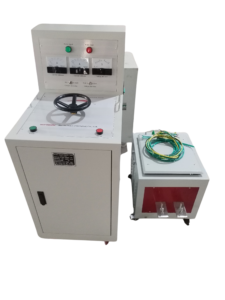
Click the image to know more about 6000A Primary Current Injection Tester.
What Happens During Primary Current Injection Testing?
A primary current injection tester generates a high current and delivers it through the circuit under test. The output must provide sufficient voltage to overcome the impedance of the cables, connections, and equipment.
For a predominantly resistive circuit, the relationship follows Ohm’s law:
V = I × R
Where V is voltage, I is current, and R is resistance.
For example, a circuit resistance of 1 mΩ requires approximately 2 V to carry 2,000 A, excluding additional connection effects. The actual tester requirement depends on the complete circuit and the equipment’s output characteristics.
What Does a Primary Current Injection Tester Measure?
Depending on its design, a primary current injection tester may measure output current, elapsed time, or other test parameters. External instruments may be required to measure voltage drop, contact resistance, temperature, or CT secondary current.
During a circuit breaker test, engineers compare the measured trip response with the manufacturer’s time-current characteristics and the applicable acceptance criteria.
During a CT test, engineers compare primary current with secondary current under the defined test arrangement. This comparison can help evaluate the nominal transformation ratio but does not replace every CT accuracy test.
Why Does Circuit Impedance Affect the Test Current?
The test circuit limits the current that a tester can deliver. Long cables, undersized conductors, loose connections, and high contact resistance can increase the required output voltage.
If the tester cannot provide sufficient voltage at the target current, the required current may not be reached. Engineers should check cable sizing, connection resistance, supply conditions, and the tester’s current-voltage characteristics.
When Is Primary Current Injection Testing Used?
Primary current injection testing is used for several electrical testing applications.
| Application | Main objective |
|---|---|
| Low-voltage circuit breakers | Evaluate selected overcurrent trip functions |
| Current transformers | Compare primary and secondary current |
| Switchgear connections | Assess current-carrying connections using suitable measurements |
| Protection systems | Verify the response of components included in the test arrangement |
| Commissioning and maintenance | Check selected functions after installation or maintenance |
The test scope depends on the equipment and connection method. Primary injection does not automatically verify every mechanical, insulation, or protection function.
How Do You Choose a Suitable Test Setup?
Identify the required current, circuit impedance, test duration, measurement accuracy, and expected response before selecting a tester. Confirm that the equipment can deliver the target current under the actual load conditions.
The test procedure should also define the required connections, measurement method, and acceptance criteria. These details help engineers obtain meaningful results and avoid exceeding equipment limits.
How Can Engineers Choose a Suitable Primary Current Injection Tester?
Selection should consider maximum output current, rated capacity, input power, duty cycle, measurement requirements, and portability. A 6000 A tester can suit applications that require high current, but the actual test requirement should determine the final choice.
The Wrindu RDSL-82-6000D is designed for power plants, substations, electrical equipment manufacturers, and laboratories that need high-current injection testing.
