

How Test Circuit Impedance Affects Primary Current Injection Testing
Learn how circuit impedance, cable resistance, and contact resistance affect primary current injection output current, voltage drop, and test reliability.
Primary current injection testing uses high current to verify the performance of circuit breakers, current transformers (CTs), busbars, and other electrical equipment. However, a primary current injection tester may not deliver its rated current under every test condition.
One important reason is test circuit impedance. Cable length, conductor size, connection quality, and the impedance of the equipment under test can all affect the current that the tester delivers. Understanding these factors helps engineers prepare the test circuit and obtain reliable results.
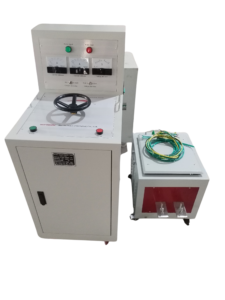
Click the image to know more about 6000A Primary Current Injection Tester.
What Is Test Circuit Impedance in Primary Current Injection Testing?
Test circuit impedance is the total opposition that the test circuit presents to the injected current. It includes the effects of resistance and reactance.
The total impedance depends on several components:
- Current injection cables and connecting conductors
- Contact resistance at terminals and connection points
- The impedance of the equipment under test
- The arrangement and length of the current loop
At high current, even a small increase in circuit impedance can significantly reduce the current available from the tester. This is particularly important when testing low-voltage circuit breakers, busbars, and other low-impedance equipment.
How Does Circuit Impedance Affect Output Current?
A primary current injection tester has a limited output voltage and power capacity. The current it can deliver depends on the voltage available across the complete test circuit and the circuit impedance.
For an AC circuit, the general relationship is:
I = V / Z
Where:
- I is the test current.
- V is the voltage available across the test circuit.
- Z is the total circuit impedance.
For a mainly resistive circuit, the relationship can be approximated as I = V / R, where R is the total resistance. In practical high-current testing, however, cable and circuit reactance may also affect the result.
For example, a tester may have a rated output of 6,000 A at 6 V. This rating does not guarantee that it will deliver 6,000 A through every test circuit. If the circuit impedance is too high, the available current may be lower than the target value.
How Do Test Cables Affect Primary Injection Current?
Test cables form an important part of the current path. Long cables and conductors with insufficient cross-sectional area can increase resistance and voltage drop.
To reduce cable-related impedance:
- Use cables with a suitable cross-sectional area for the required current and test duration.
- Keep cable lengths as short as practical.
- Use the cable arrangement specified by the tester manufacturer.
- Keep outgoing and return conductors close together where the approved setup allows it, reducing loop inductance.
- Check cables for damaged insulation, loose connectors, and signs of overheating.
- Use properly rated connectors and busbars for high-current applications.
Do not select cables based on current rating alone. Cable length, connection method, temperature rise, and the required injection duration also matter.
Why Do Loose Connections Reduce Test Current?
A loose or poorly fitted connection can introduce additional contact resistance. At high current, this resistance creates a voltage drop and heat at the connection point.
The result may include reduced output current, unstable readings, or excessive heating. A poor connection can also damage the test equipment or the equipment under test.
Before injection, inspect the terminals and contact surfaces. Confirm that the connections are secure and that the selected connection method follows the equipment manufacturer’s instructions.
Never tighten or adjust energized high-current connections. Isolate the test circuit and confirm that it is safe before making any changes.
How Can You Check Whether Circuit Impedance Is Too High?
If the tester cannot reach the required current, do not immediately assume that the instrument is faulty. Check the complete test setup first.
| Check | What to look for | Possible effect |
|---|---|---|
| Input supply | Voltage drop or an unsuitable supply | Reduced output capability |
| Test cables | Excessive length or insufficient conductor size | Higher impedance and voltage drop |
| Connections | Loose terminals or poor contact surfaces | Additional contact resistance |
| Test object | Impedance higher than expected | Lower achievable current |
| Output configuration | Incorrect range or connection arrangement | Insufficient voltage or current |
| Thermal condition | Overtemperature or duty-cycle limits | Output interruption or reduced availability |
Follow the tester manual when measuring circuit impedance or changing the output configuration. Do not exceed the rated output, current, voltage, or duty cycle.
How Can You Reduce Circuit Impedance During Testing?
A practical approach is to review the complete current path before starting the test.
First, check the input supply and confirm that it meets the tester’s requirements. Next, inspect the cable arrangement, connection points, and test object. If the current remains below the target, consult the instrument manual to determine whether a different approved output configuration is suitable.
Some high-current systems offer series and parallel output configurations. These configurations can provide different combinations of output current and voltage, but their use depends on the tester’s design and the impedance of the test circuit.
Record the actual test current and relevant setup details. If the current cannot reach the required value, resolve the cause before using the result to assess equipment performance.
How Does Circuit Impedance Affect Test Reliability?
An unstable or insufficient test current can affect the interpretation of primary injection test results. For example, a circuit breaker may not receive the intended current, making its trip-time result unsuitable for comparison with the required acceptance limits.
Circuit heating can also change resistance during a test. Some primary injection systems use current feedback to maintain the set value, while other systems may require the operator to monitor and adjust the output. The applicable operating method depends on the equipment design.
Engineers should verify the actual current delivered during each test and compare the results with the relevant equipment specifications and test procedure.
Which Primary Current Injection Tester Is Suitable for High-Current Testing?
The appropriate tester depends on the target current, available output voltage, circuit impedance, test duration, and the requirements of the equipment under test.
Wrindu’s RDSL-82-6000D Primary Current Injection Tester is rated for 6,000 A output at 6 V, with a rated capacity of 36 kVA. Its stated power-on time is less than 2.5 minutes, and its working cycle is longer than 10 minutes. Operators should follow the product documentation for the applicable operating conditions.
The rated output does not mean that every test circuit will reach 6,000 A. Cable impedance, the test object, input supply, and connection quality must also be considered.
Learn more about the RDSL-82-6000D Primary Current Injection Tester.
For a broader explanation of test principles, applications, and equipment requirements, read Wrindu’s Primary Current Injection Testing: Complete Guide.
Frequently Asked Questions
Can long test cables reduce primary injection current?
Yes. Longer cables can increase resistance and loop impedance, causing greater voltage drop and reducing the current available to the test object.
Why does a primary current injection tester fail to reach its rated current?
Possible causes include high circuit impedance, long or undersized cables, poor connections, a weak input supply, an unsuitable output configuration, or thermal limitations. Check the complete setup before concluding that the tester is faulty.
Does a higher output voltage always produce a higher test current?
Not necessarily. The current also depends on the total circuit impedance and the tester’s output capability. The voltage and current ratings must be considered together.
How can engineers improve current stability during injection testing?
Use a suitable cable arrangement, secure all connections, verify the input supply, and follow the tester’s operating instructions. Monitor the actual current throughout the test when the instrument supports this function.
Get Technical Support from Wrindu
Wrindu supplies primary current injection testers and electrical testing equipment for power utilities, substations, laboratories, and electrical equipment manufacturers. For help matching output requirements to a specific test circuit, contact Wrindu with the target current, test object, cable arrangement, and required injection duration.
Visit the Wrindu contact page to discuss your application.
