

What Causes Voltage and Current Imbalance in Three-Phase Systems?
Learn what causes three-phase voltage and current imbalance, how to calculate imbalance, and how to measure and correct power system problems.
Three-phase imbalance is a common power quality problem in industrial electrical systems. It occurs when the voltage or current values in a three-phase system are not equal or properly balanced.
Voltage and current imbalance can increase motor heating, reduce equipment efficiency, and affect the operation of electrical protection devices. Identifying the causes and measuring the imbalance rate helps engineers evaluate system conditions and prevent equipment problems.
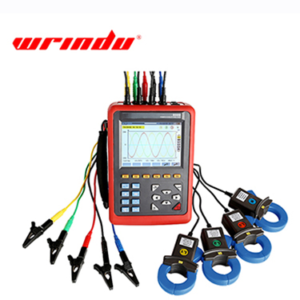
Click the image to know more about Wrindu Power Quality Analyzer.
What Is Three-Phase Imbalance?
A balanced three-phase system has three voltage waveforms with equal magnitudes and a phase difference of 120 degrees. Under balanced operating conditions, the three phase currents are also normally similar when the connected loads are balanced.
Three-phase imbalance occurs when the phase voltages or currents differ in magnitude or phase relationship.
There are two main types:
- Voltage imbalance: The three-phase supply voltages have unequal magnitudes or an abnormal phase relationship.
- Current imbalance: The currents in the three phases have different magnitudes or phase relationships.
Voltage imbalance can affect the operation of three-phase motors and other equipment. Current imbalance may indicate uneven load distribution, equipment faults, or supply problems.
What Causes Voltage Imbalance in Three-Phase Systems?
Voltage imbalance can originate from the power supply network, electrical connections, or connected loads.
1. Uneven phase loading
When single-phase loads are distributed unevenly across three phases, the resulting voltage drops may differ. This can contribute to voltage imbalance, especially in systems with significant load variation.
2. Loose or damaged connections
Loose terminals, damaged cables, and poor electrical contacts can create different voltage drops between phases.
3. Transformer problems
Uneven loading, winding problems, or abnormal transformer connections can affect the phase voltages.
4. Utility supply conditions
Voltage imbalance may originate from the upstream distribution network. In this case, the problem may affect multiple facilities connected to the same supply system.
5. Faults in electrical circuits
Open conductors, damaged connections, and other phase-related faults can cause abnormal voltage conditions.
What Causes Current Imbalance in Three-Phase Systems?
Current imbalance often occurs when the three phases carry different loads or when electrical equipment develops a fault.
Common causes include:
- Uneven distribution of single-phase loads
- Different operating conditions between three-phase loads
- Motor winding or insulation problems
- Loose connections and damaged conductors
- Unbalanced voltage supply
- Faulty electrical components
For example, a factory may connect several single-phase machines to one phase while the other phases carry fewer loads. This can create different current levels across the three phases.
Engineers should check both voltage and current measurements before deciding whether the problem comes from the supply network or the connected equipment.
How Do Voltage and Current Imbalance Affect Electrical Equipment?
Three-phase imbalance can increase electrical losses and affect equipment performance.
| Equipment | Possible Effects |
|---|---|
| Three-phase motors | Extra heating, reduced torque, vibration, and shorter insulation life |
| Transformers | Uneven winding loading and increased losses |
| Cables | Uneven phase currents and possible overheating |
| Circuit breakers | Abnormal protection operation under certain conditions |
| Power converters | Unbalanced input conditions and possible alarms |
| Industrial production equipment | Unstable operation or unexpected shutdowns |
Voltage imbalance is particularly important for three-phase induction motors. Even a relatively small voltage imbalance can produce a much larger current imbalance, increasing motor heating.
The actual impact depends on motor design, load, operating time, and the level of imbalance.
How to Calculate Voltage Imbalance?
One commonly used calculation method is the maximum deviation from the average phase voltage.
First, calculate the average of the three phase voltages:
[
V_{avg}=\frac{V_A+V_B+V_C}{3}
]
Then calculate the maximum deviation from the average:
[
\text{Voltage Imbalance (%)}=
\frac{\text{Maximum Deviation}}{V_{avg}}\times100%
]
For example, assume a three-phase system has the following line-to-line voltages:
| Measurement | Voltage |
|---|---|
| VAB | 400 V |
| VBC | 395 V |
| VCA | 405 V |
The average voltage is:
[
V_{avg}=\frac{400+395+405}{3}=400V
]
The maximum deviation is 5 V.
Therefore:
[
\text{Voltage Imbalance}=\frac{5}{400}\times100%=1.25%
]
This method gives a simple indication of voltage magnitude imbalance.
However, it does not fully evaluate phase-angle imbalance. For more complete analysis, engineers may use the negative-sequence voltage method, which compares negative-sequence voltage with positive-sequence voltage.
Different standards and equipment specifications may use different definitions. Always check the required calculation method before comparing results with a limit.
How to Measure Current Imbalance in a Three-Phase System?
Current imbalance can be evaluated using the same maximum-deviation-from-average approach.
First, calculate the average phase current:
[
I_{avg}=\frac{I_A+I_B+I_C}{3}
]
Then calculate:
[
\text{Current Imbalance (%)}=
\frac{\text{Maximum Deviation}}{I_{avg}}\times100%
]
For example, assume the measured phase currents are:
| Phase | Current |
|---|---|
| A | 100 A |
| B | 110 A |
| C | 90 A |
The average current is:
[
I_{avg}=\frac{100+110+90}{3}=100A
]
The maximum deviation is 10 A.
Therefore:
[
\text{Current Imbalance}=\frac{10}{100}\times100%=10%
]
This result indicates that the three phase currents are not evenly distributed.
The calculation is useful for a basic assessment, but it does not replace a full investigation of phase angles, harmonics, or negative-sequence current.
How to Measure Three-Phase Imbalance with a Power Quality Analyzer?
A power quality analyzer can measure three-phase voltage and current simultaneously. This helps engineers compare phase values and identify abnormal operating conditions.
A practical measurement process includes:
Step 1: Confirm the system configuration
Identify whether the system uses a three-phase three-wire or three-phase four-wire connection. Confirm the nominal voltage and measurement requirements.
Step 2: Connect voltage leads
Connect the voltage measurement leads to the corresponding phases. Follow the instrument’s wiring diagram and safety instructions.
Step 3: Install current clamps
Place the current clamps around the correct phase conductors. Check the clamp direction and phase identification.
Step 4: Record three-phase data
Measure the phase voltages and currents under normal operating conditions. If the load changes during operation, record data over a suitable period.
Step 5: Compare phase values
Check the voltage and current magnitudes, phase relationships, and calculated imbalance values.
Step 6: Investigate the source
If the results show abnormal imbalance, inspect load distribution, cable connections, transformer conditions, and connected equipment.
What Is an Acceptable Three-Phase Voltage Imbalance?
The acceptable voltage imbalance depends on the applicable standard, equipment requirements, and measurement method.
For motor applications, NEMA MG 1 provides guidance on voltage unbalance and motor operation. A commonly referenced recommendation is to keep voltage unbalance at the motor terminals within 1% for normal operation at rated load.
This value should not be treated as a universal limit for every electrical system. Engineers should check the motor manufacturer’s requirements and the applicable standard.
It is also important to distinguish voltage imbalance from current imbalance. A current imbalance value cannot be directly compared with a voltage imbalance limit.
How Can Engineers Correct Three-Phase Imbalance?
The correction method depends on the source of the problem.
| Problem | Possible Solution |
|---|---|
| Uneven single-phase loads | Redistribute loads across the three phases |
| Loose electrical connections | Inspect and tighten connections according to specifications |
| Damaged cables | Repair or replace damaged conductors |
| Transformer problems | Inspect transformer connections and operating conditions |
| Motor winding faults | Perform suitable motor electrical tests |
| Upstream supply imbalance | Contact the utility or inspect the incoming supply |
Engineers should measure the system again after corrective work. Comparing measurements before and after the adjustment helps confirm whether the imbalance has improved.
How Does the Wrindu RDCR5000 Help Measure Three-Phase Imbalance?
The Wrindu RDCR5000 Digital Power Quality Analyzer is designed for electrical measurement and power quality analysis in industrial systems.
Its relevant functions include:
- Four voltage and four current measurement channels
- Three-phase voltage and current measurement
- Voltage and current imbalance measurement
- Voltage and current harmonic analysis up to the 50th order
- THD measurement
- Transient waveform capture
- Data recording and alarm logging
These functions help engineers compare phase conditions, monitor electrical loads, and investigate power quality problems.
The instrument supports simultaneous measurement of multiple voltage and current channels, which is useful when evaluating three-phase systems.
Click the picture to learn more about the Wrindu RDCR5000 Digital Power Quality Analyzer.
Frequently Asked Questions About Three-Phase Imbalance
Can voltage imbalance cause current imbalance?
Yes. Unequal phase voltages can cause unbalanced currents, particularly in three-phase induction motors. The resulting current imbalance may be significantly greater than the voltage imbalance.
What happens if a three-phase motor operates with unbalanced voltage?
Unbalanced voltage can increase motor current imbalance and winding temperature. Continued operation under unsuitable conditions may reduce motor efficiency and shorten insulation life.
How often should engineers check three-phase imbalance?
The monitoring frequency depends on the equipment and operating conditions. Facilities with large motors, changing loads, or recurring electrical problems may benefit from regular power quality monitoring.
Can a multimeter measure three-phase imbalance?
A multimeter can measure individual phase voltages or currents, but engineers must record and calculate the imbalance manually. A power quality analyzer can measure multiple phases simultaneously and provide a more complete view of system conditions.
Is current imbalance the same as voltage imbalance?
No. Voltage imbalance describes differences in the three-phase supply voltages, while current imbalance describes differences in phase currents. They are related, but they measure different electrical conditions.
Conclusion
Three-phase voltage and current imbalance can affect motors, transformers, cables, and other industrial equipment. Common causes include uneven loading, poor connections, equipment faults, and upstream supply problems.
Engineers should measure both voltage and current imbalance to identify the source of abnormal conditions. A power quality analyzer helps record phase data, compare electrical parameters, and support troubleshooting in three-phase systems.
